

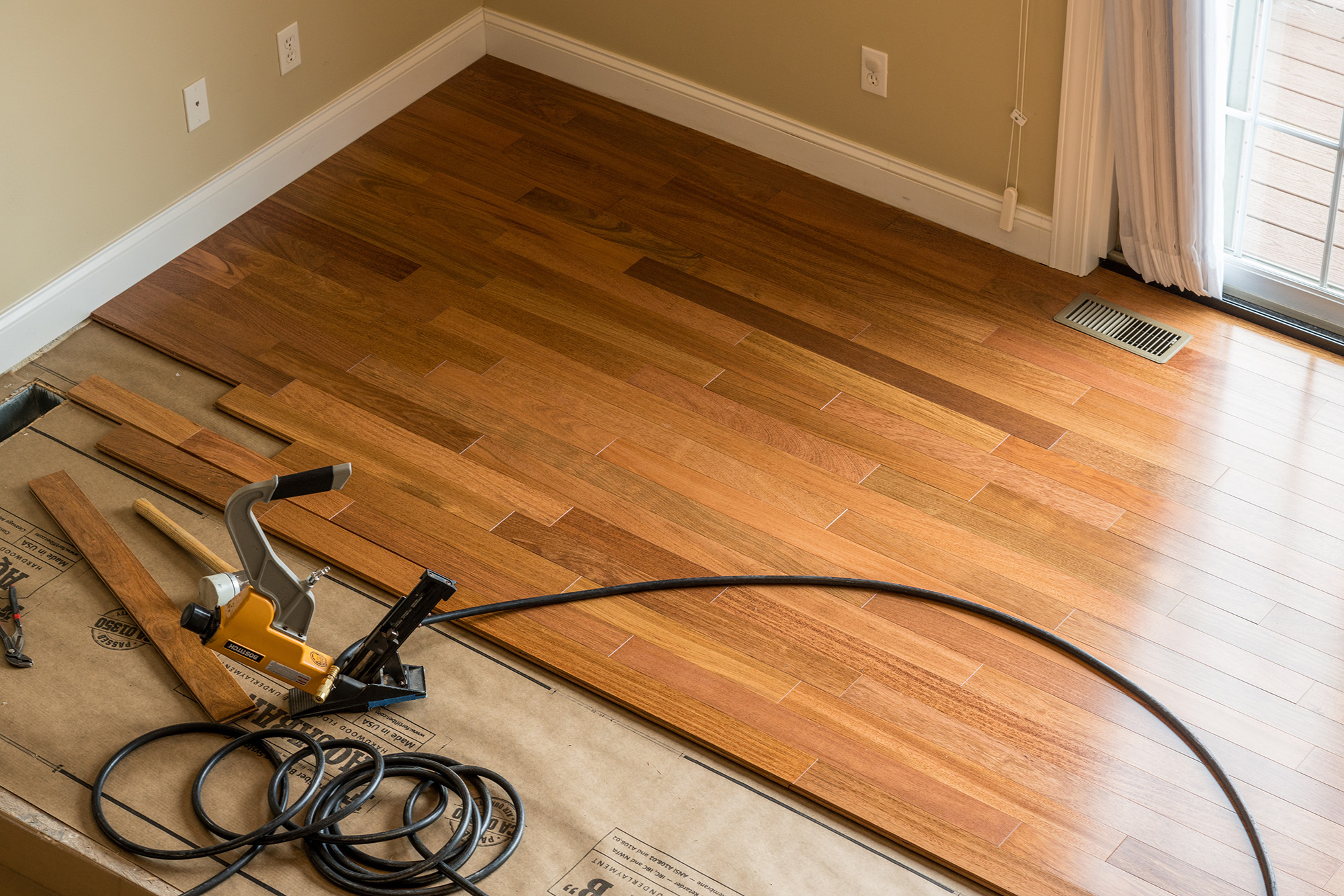
Wood and the materials underneath it, the subfloor, the fasteners, and the structure of the house itself, all respond to overnight temperature changes before the home warms back up for the day. Most homes cool down several degrees overnight, even with heating running on a lower setting, and that temperature drop causes slight contraction in wood and metal components that were expanded during the warmer part of the day. As everything readjusts, small movements between boards, fasteners, and the subfloor can produce the creaking sound homeowners notice most in the first hour or two after getting up.
What Is Actually Moving When A Floor Creaks
A creak happens when two surfaces that are not perfectly fixed to each other rub or shift slightly under weight. This can be a board moving against the fastener holding it down, two boards rubbing against each other at a seam, or the subfloor itself flexing slightly against the floor joists below it. None of these movements are usually large enough to see, but they are enough to produce sound, especially in a quiet house first thing in the morning when there is no other noise to mask it.
Overnight cooling makes this more noticeable because materials contract slightly as they cool, which can create just enough gap or looseness for movement to happen more easily than it does once the house warms up and everything expands back to its daytime state. This is also why creaking in older homes tends to follow a predictable daily pattern, quieter through the afternoon and evening, more noticeable again once the house cools overnight and through the following morning.
Why This Is More Noticeable In Older Homes
Homes with older hardwood, particularly floors installed with cut nails or older fastening methods, tend to show this pattern more than newer installations using modern fasteners and adhesives. Decades of temperature cycling can gradually loosen the original connection points slightly, which is a completely normal part of how a house this age settles and moves over time rather than a sign of a failing floor.
Homes with forced hot air heating also tend to show more of this daily pattern than homes with radiant or hydronic heat, since forced air systems typically cycle on and off rather than maintaining a more constant temperature. That temperature swing between heating cycles is enough to produce the same expansion and contraction pattern that happens on a larger scale between night and day.
When Morning Creaking Is Worth A Closer Look
A predictable pattern of quieter afternoons and noisier mornings across the whole floor is typically just normal material movement and not something that needs repair. What is worth paying attention to is a creak that shows up in one specific spot regardless of time of day, gets noticeably louder over a period of weeks, or comes with any visible movement, gapping, or a soft feeling underfoot in that same area.
That kind of localized, worsening pattern points toward something specific happening at that spot, whether it is a loose fastener, a subfloor issue, or movement in the framing below, and is worth having looked at rather than assumed to be the same normal daily cycle as the rest of the floor.
Living With A Normal Amount Of Morning Creak
Most morning creaking in an older hardwood floor is simply the sound of a house doing what houses do every single day, expanding and contracting with temperature. It does not usually indicate a problem, and it is not something that necessarily needs to be fixed.
L.A.F Floors & Interiors can take a look at any creaking that seems inconsistent with normal daily temperature patterns, and help homeowners across Worcester, Shrewsbury, Westborough, Southborough, Northborough, Grafton, and Millbury, MA tell the difference between ordinary settling and something that actually needs attention.
Visit our showroom in Shrewsbury, MA, one of Shrewsbury, MA, if you have questions about an existing floor or are planning a new installation. We proudly serve homeowners across Worcester, Shrewsbury, Westborough, Southborough, Northborough, Grafton, and Millbury, MA. Contact us to have a specific spot looked at, or browse our hardwood flooring collection if you are considering a new installation.

