

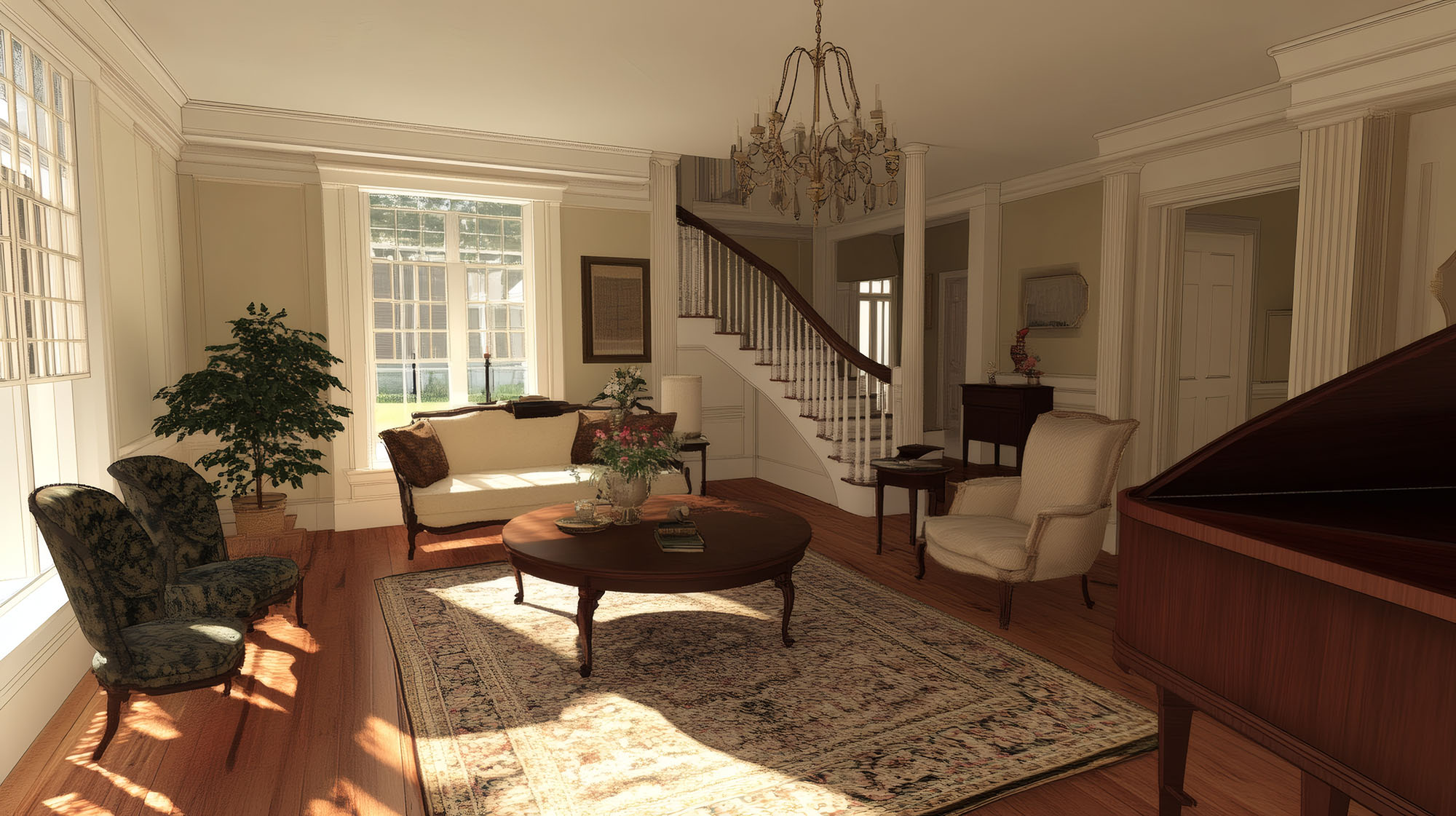
Light behaves very differently in a north facing room, a room with small windows, or a space shaded by trees or a neighboring building, and hardwood color reacts to that difference more than most homeowners expect. The same floor sample can look golden and lively under direct sun and noticeably flatter or grayer under consistent indirect light. This is one of the most common reasons a homeowner ends up unhappy with a floor that looked great on paper, and it has nothing to do with the quality of the wood itself.
Why Light Direction Changes How Wood Tone Reads
Rooms without much direct sunlight tend to receive cooler, bluer toned ambient light, especially in New England where overcast skies are common for a good part of the year. This cooler light interacts with wood tone in a way that can make already light or gray leaning floors feel washed out or flat rather than bright, which is the opposite effect homeowners are usually going for when they pick a lighter floor to open up a dim space.
Warmer toned hardwood, the honey, chestnut, and mid brown range that has become the dominant direction in flooring color this year, tends to hold its richness under indirect light in a way that very light or very gray tones do not. The warmth in the wood itself compensates for the lack of warmth coming from the sun, which is why a room with limited natural light often looks more balanced with a mid tone floor than with an extremely pale one.
Where A Lot Of Homeowners Get This Wrong
A common instinct is to choose the lightest possible floor for a dark room, assuming it will brighten the space the way a light colored floor does in a sunny room. Without direct light hitting the wood, that same pale floor can end up looking dull instead of bright, since it depends on sunlight to bring out its lightness and grain in the first place. This is a case where the number one intuitive choice often works against you.
Species selection plays a role here too. White oak in a mid tone finish tends to perform well in lower light rooms because its grain still reads clearly without strong sun, while some paler species can look almost featureless without direct light to catch the grain texture. Seeing an actual sample in the room itself, at the time of day it gets the least light, gives a far more accurate picture than judging a sample under showroom lighting.
Finishes That Help In Low Light Spaces
A matte or low sheen finish tends to work better in rooms with limited natural light than a high gloss finish, since glossy floors rely on light bouncing off the surface to look their best. Without much light to reflect, a glossy floor in a dim room can actually look duller than a matte floor of the same color, since there is less light available to create that reflective effect in the first place.
This is part of why the shift toward matte and low sheen finishes happening across the industry this year works particularly well for homes with rooms that do not get much sun, beyond just being a current style preference.
Getting The Right Tone For Your Specific Room
The only reliable way to know how a hardwood tone will actually look in a low light room is to see a real sample in that exact room, ideally at different times of day, rather than relying on how it looks under bright showroom lighting or in photos.
L.A.F Floors & Interiors can bring sample boards to your Worcester, Shrewsbury, Westborough, Southborough, Northborough, Grafton, and Millbury, MA home so you can see exactly how different tones and finishes perform in your specific lighting conditions before making a decision.
Visit our showroom in Shrewsbury, MA, one of Shrewsbury, MA, to start narrowing down tones, then let us help you test them in the actual room. We proudly serve homeowners across Worcester, Shrewsbury, Westborough, Southborough, Northborough, Grafton, and Millbury, MA. Contact us to arrange an in home sample viewing, or browse our hardwood flooring collection to see current tone options.

